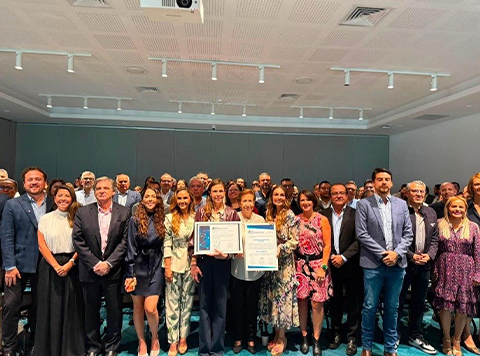
Querétaro recibe Distinción como Destino Turístico Inteligente
19 agosto, 2026
Over the past decade, several conceptual frameworks have competed for the attention of those who plan cities and tourist destinations in Latin America: the Smart Tourism Destination (STD) model formalized by SEGITTUR in Spain; the 15-Minute City conceived by Carlos Moreno and adopted by Paris; the principles of urban diversity described by Jane Jacobs; the “Fitopolis” proposed by Stefano Mancuso, which envisions vegetation as active infrastructure; international urban decarbonization frameworks such as C40, ICLEI, and the Global Covenant of Mayors; and Elinor Ostrom’s work on the governance of the commons. They are usually presented as competing alternatives, as though a city had to choose between being tourist-oriented or residential, dense or green, technological or self-governed. That dichotomy is a misreading: these frameworks do not compete for the same conceptual space. They operate at different, complementary layers of the same urban system—and Latin America’s small and medium-sized cities are precisely the territories with the best structural conditions for integrating them.
Each framework addresses a different question, and much of their apparent incompatibility disappears once we recognize that they are not competing to provide the same answer. The STD model asks how a territory can be managed for those who visit it without diminishing the quality of life of those who live there, through governance, innovation, technology, accessibility, and sustainability. The 15-Minute City asks how much time residents should need to meet their essential needs and answers by combining density, proximity, diversity, and digitalization. Jacobs asks which physical conditions ensure that a street is genuinely inhabited throughout the day. Mancuso asks what a city is made of and argues that a greater proportion of it should consist of functional vegetation. C40, ICLEI, and the Global Covenant of Mayors ask how much CO₂ a city emits and how those emissions can be reduced in measurable ways. Ostrom asks who decides, who monitors, and who sustains over time any system governing the use of a shared resource—from an irrigation system to an urban block.
This supposed rivalry does not withstand even the most basic historical examination. Moreno was explicitly inspired by Jacobs, and the components of their approaches correspond point by point. Where Jacobs called for mixed primary uses and short blocks, Moreno calls for functional diversity and translates that permeability into a 15-minute walking radius. Where Jacobs called for sufficient density, Moreno turns it into one of his four pillars. There is no need to choose between Jacobs and Moreno, because applying the latter without the conditions described by the former prevents the 15-Minute City from achieving its own objectives. The two approaches are already integrated by intellectual design.
Nor, as is often assumed, do tourism and the proximity city compete with one another. SEGITTUR’s own definition states that a Smart Tourism Destination facilitates visitors’ interaction with their surroundings while improving residents’ quality of life: it is the same objective measured from two different positions. Tequila, Jalisco—the first Latin American destination certified under the STD model—provides evidence of this in practice. It is a town, not a capital city, where the process was organized around 80% governance and institutional coordination and only 20% technology, because in a small territory, coordination among stakeholders produces greater returns than digital instrumentation.
Nor do density and vegetation compete. Mancuso does not advocate less city, but less asphalt. Between 30% and 40% of the surface area of a typical city is paved, and reducing that proportion by replacing asphalt with functional tree cover does not require sacrificing housing or commerce, because the contested space is currently occupied by excess road infrastructure. Cities generate approximately 70% of global energy-related CO₂ emissions; that same scale also reflects the scope of their potential contribution to reducing them. Reclaiming space from asphalt simultaneously benefits proximity, living infrastructure, and decarbonization targets.
None of these frameworks, however, answers the question of who sustains their integration when a government changes. That is the question Ostrom answers. Without clear boundaries and collective-choice rules, an STD designation becomes institutional marketing. Without shared monitoring, a proximity objective is eroded by the first exception to planning regulations. Without nested governance, the goal of reducing paved surfaces collides with a public works department organized around the opposite logic. Small and medium scale is not a limitation that this integration must overcome; it is the very condition that makes it viable: fewer veto players, shorter decision-making chains, and—as Geoffrey West’s evidence on urban scaling laws suggests—the ability to retain much of the efficiency of shared infrastructure without paying the steepest price of the pathologies that intensify with urban size.
None of this makes integration automatic. Treating these approaches merely as layers within a closed municipal system, while ignoring the flows of people, capital, and data connecting it to its wider region, may solve a local problem only to create a regional one. Similarly, improving proximity without protecting affordable housing may increase neighborhood costs and displace the very people the policy was intended to benefit. The institutional fragmentation that distributes these six frameworks across departments lacking shared budgets and data should be addressed not by centralizing them, but through the same nested governance described by Ostrom.
These frameworks do not compete for the same conceptual territory. They describe, measure, certify, and sustain different layers of the same urban system, and none of them, applied in isolation, can solve the issues addressed by the other five. Tequila demonstrates that integrating them is not an exercise reserved for capital cities with abundant budgets. It is a process that Latin America’s small and medium-sized cities have already begun to undertake, precisely because their scale—not merely their smaller size—makes this coordination viable. Choosing only one of these frameworks and rejecting the others is neither prudence nor specialization. It means unnecessarily abandoning questions that the city will have to answer anyway, but with less information and less room to maneuver than if those frameworks had been integrated from the outset.
That is why it is time for “and,” not “or”—and systems theory explains why. A system is not the sum of its parts, but the network of relationships connecting them. From that network emerge properties that do not exist in any layer on its own. The climate resilience of an urban block does not reside in Mancuso’s tree cover or in STD certification taken separately, but in the way both interact with Ostrom’s governance and the proximity principles of Jacobs and Moreno.
Applying these layers one after another treats the system as though it were additive and predictable, when it is, in fact, nonlinear: a small change in a single layer—an exception to planning regulations or a cut in the tree-planting budget—can propagate through and become amplified across the others. Managing them simultaneously, allowing them to adjust to one another in real time within the same territory, is the only way to give these emergent properties—a more livable, cooler, better-governed, and less unequal city, all at once—the opportunity to appear. They emerge from interaction, not addition, and begin to deteriorate as soon as a single layer stops responding to the others.
Nota original del portal: Smart Tourism and Cities: It Is Time for ‘And,’ Not ‘Or’