
How Smart Tourism Destinations Turn Data Into Action
5 junio, 2026
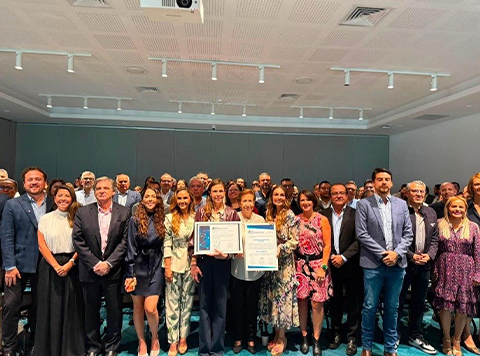
Querétaro recibe Distinción como Destino Turístico Inteligente
19 agosto, 2026
A Destination Management Organization (DMO) is neither a larger tourism office nor an inter-institutional coordination roundtable. It is the system of relationships through which a tourism territory produces collective capacity to decide, adapt, and learn — beyond what any of its individual actors could achieve on their own. Yet, most DMOs continue to operate under a normative logic that reduces them to mechanisms of participation, transparency, or administrative coordination, without explaining how these conditions actually generate real management capacity.
A reconceptualization is needed: an effective DMO does not reside in its formal structure, but rather emerges from the quality of the relationships among the destination’s actors — public administrations, businesses, communities, and visitors — and from the information that circulates among them. When that system reaches sufficient density, it produces capacities that exceed the sum of its parts.
The contemporary challenges facing any tourism destination — overtourism, seasonality, impact on resident communities, digital transformation, sustainability — can no longer be addressed through traditional hierarchical structures. The diversity of actors, the speed of change, and the interdependence of competing interests demand forms of coordination capable of integrating distributed knowledge and continuous learning. This is why the DMO has ceased to be synonymous with tourism authority and has become instead a capacity for articulation: between public and private sectors, between local and regional scales, between what the territory offers and what the market demands.
A System That Produces More Than It Coordinates
Viewed through systems theory, the capacity of a DMO cannot be located in any of its isolated components — not in its bylaws, not in its board of directors, not in its strategic plan. It resides in the set of interactions among its parts, from which capabilities can emerge that none of them individually possess.
An emergent property requires no extraordinary event to manifest: it is enough for sufficient interactions among a destination’s actors to exist for something to arise that was not present in any of them individually (Gershenson, 2023). What a well-articulated DMO can produce — resilience in a crisis, collective responses to overtourism, innovation in visitor experience — always exceeds the simple sum of its members’ contributions.
No strategic plan can decree that this will happen: what is sought does not reside in the instrument but in the density and quality of the relationships that instrument activates. This web of relationships does not sustain itself in a vacuum: what circulates among the destination’s nodes and enables coordination is information. No single actor in a destination can accumulate on its own all the knowledge the territory needs to govern itself; that knowledge can only be reconstituted through networks that distribute, process, and combine it collectively (Hidalgo, 2015).
A well-designed DMO processes more information than any of its actors could handle in isolation, and from that collective processing produces decisions that no individual node could have reached alone. A destination’s advantage does not come from one actor concentrating more information than others, but from the DMO reducing the costs of coordinating the knowledge already dispersed among all of them.
This condition has an uncomfortable consequence for those who lead a destination: if order does not arise from a single center that controls everything, managing a destination no longer means issuing directives from the tourism authority — it means coordinating interdependencies that no actor fully controls.
An effective DMO builds collective intelligence through deliberation, cooperation, and continuous learning among its actors (Innerarity, 2020). Leading a complex destination is not imposing a master plan upon it, but designing the conditions from which a greater capacity for response can emerge from the interaction of its parts — a capacity no tourism authority could have planned alone.
Permanent Negotiation as the DMO’s Central Function
If managing a destination means coordinating interdependencies that no actor fully controls, then managing a destination also means, constantly, managing the conflicts those interdependencies generate. When no center has the authority to impose a single solution, disagreements are not resolved by mandate but through negotiation — the mechanism that allows interests to be reconciled without destroying the system of relationships upon which everyone depends (Innerarity, 2020). Interdependence among actors does not eliminate conflict; it multiplies it, because it binds actors with divergent interests to shared outcomes. But it also eliminates the possibility of resolving conflict through a simple hierarchy.
Negotiation is therefore not an occasional activity for a DMO: it is its most ordinary and permanent function. Conflict among actors is not an anomaly that interrupts management; it is its most frequent content, because interaction is almost always a matter of adjusting interests that do not fully align (Gershenson, 2023). It is precisely the friction between heterogeneous interests that obliges actors to interact repeatedly, and it is that repetition which, over time, gives rise to agreements, norms, and routines of cooperation.
For this process to be possible, the DMO must ensure that the system has sufficient shared information for actors to recognize their points of divergence and convergence (Hidalgo, 2015). The essence of that negotiation is not technical but relational: every agreement among a destination’s actors depends on each party revealing what it truly needs, and that only happens when the other party feels understood, not defeated.
Understanding the real interests behind each actor’s stated position is the very condition that makes agreement among interdependent parties possible (Voss & Raz, 2016). A DMO that merely convenes working tables without cultivating mutual understanding produces meetings, not agreements. Negotiation is not an additional tool of the DMO: it is its most intimate mechanism of production — the precise place where interdependence among actors ceases to be mere friction and becomes something that none of them could have produced alone.
Coordination: When to Centralize and When to Distribute
A DMO that understands its systemic nature knows it cannot concentrate all decision-making authority over the destination. Studies on common-pool resource management demonstrated that effective coordination does not depend on a single central authority: multiple decision-making centers can cooperate through shared rules, monitoring mechanisms, and mutual learning (Ostrom, 1990).
In a complex tourism destination — where local, regional, and national administrations, businesses, trade associations, universities, and community organizations all participate — effective coordination can only arise from relationships that integrate multiple levels of decision-making. The DMO is not the apex of a hierarchy but the node that articulates that network of centers.
It is important to clarify, however, that this does not mean every decision in a destination must be made in a distributed manner. There are decisions — urgent, technical, low-conflict — that a single center resolves more effectively than a distributed network; forcing broad consultation in those cases does not produce better management but paralysis. Tourism management has tended to assume, almost by default, a centralized vision without examining whether that was the architecture the problem actually required. A mature DMO does not choose between centralization and distribution as if they were mutually exclusive models: it recognizes, problem by problem, which architecture corresponds to each situation, and builds the capacity to move between the two as the destination requires.
From Articulation to Implementation: The DMO as a Project System
Understanding the DMO as an emergent system carries a risk: remaining at a descriptive level that explains why certain capacities arise, but not how to deliberately construct them. Formally creating a DMO or approving a strategic plan are necessary but insufficient steps if they do not modify the processes, technologies, and relationships that structure the destination. The DMO only acquires effective existence when it is translated into capabilities through project systems: each project intervenes on one component of the destination, but systemic change only occurs when multiple projects are aligned toward common objectives, generating collective learning and progressively transforming the relational structure until forms of coordination that did not previously exist become possible.
The DMO in a Smart Tourism Destination
The Smart Tourism Destination (STD) methodology developed by SEGITTUR establishes five management dimensions — governance, innovation, technology, sustainability, and accessibility — and conceives of the DMO as the process through which public, private, and social actors are articulated to strategically direct the development of the destination. These dimensions are not independent pillars that the DMO manages separately: they are the outcome of a system of relationships that the DMO cultivates. When that system reaches sufficient density, a collective capacity emerges to make decisions, share information, and respond to the environment that none of those actors possessed individually.
A smart tourism destination articulates interdependent projects — in mobility, digitalization, sustainability, training, accessibility, and community participation — some managed centrally and others in a distributed manner. Artificial intelligence and data systems do not replace the DMO or the negotiation among its actors: they expand the quality and timeliness of the information available so that those actors can negotiate with better evidence. The effectiveness of a DMO is not measured by how much technology it incorporates, but by how much better negotiation it enables among those who ultimately manage the territory.
Conclusion
An effective DMO is the system of relationships through which a tourism destination’s actors coordinate distributed knowledge, decisions, and capabilities through the institutional architecture that each context demands — through permanent negotiation and implementation organized in project systems.
When that system reaches sufficient relational density, it produces something that exceeds the sum of its parts: capacities for response, learning, and adaptation to crises, overtourism, or market shifts that no institutional design could have anticipated. Its logic resembles an organism rather than a machine: a well-articulated destination generates new properties from the continuous interaction among its actors.
Managing a smart tourism destination means cultivating the interactions, information flows, and negotiation processes from which a DMO as a living system can emerge, as something more than what was put into it to coordinate. That capacity is not a finishing point: it is a condition the system produces and reproduces every time its actors interact enough to coordinate.
But this understanding is not merely conceptual: it has direct practical consequences for how a DMO must conceive its own role. A Destination Management Organization that is aware of the emergence of the system in which it operates anticipates saturation before it becomes conflict, identifies the risks of inaction before they become irreversible, and builds business models that sustain tourism activity without degrading the conditions that make it possible.
This capacity for anticipation is not a strategic luxury: it is the very reason for a DMO’s existence in a complex system. And the complexity of that system is, above all, human.
A tourism destination is not a theme park or a showcase product: it is a municipality, a city, a territory with a life of its own — with residents, economic activity, social fabric, history, educational and cultural institutions — upon which tourism acts as an external force of enormous transformative power. The emergences produced by the tourism management system do not impact only the destination’s indicators: they impact housing prices, air quality, neighborhood identity, the economy of the families who live there, and the way residents perceive their own place. A DMO that ignores this dimension — that manages the destination as if those who live in it were merely its audience or its backdrop — is not managing a smart tourism destination. The intelligence of a destination, in the deepest sense of the term, is measured by its DMO’s capacity to make the emergence of the system its very operating logic.
Original info link: DMO Evolution: Systems Theory and Smart Tourism Management