
Curitiba conquista selo internacional inédito e entra no radar global do turismo inteligente
27 marzo, 2026
¿Cómo transformamos un destino? Con inversión, impacto y comunidad.
15 mayo, 2026
Smart Tourism Destinations (STDs) have become one of the most relevant management models for contemporary tourism development. This approach seeks to integrate technology, sustainability, accessibility, and governance in order to improve territorial management, optimize visitor experiences, and enhance residents’ quality of life.
In Ibero-America, the promotion of this model has been closely linked to the growth of the Ibero-American Network of Smart Tourism Destinations, a collaborative platform that connects destinations, institutions, and organizations within the tourism sector. Its evolution reflects the increasing interest that the STD model has generated across the region. While the network had only five members in 2022, by 2026 it has grown to include more than seventy participating destinations and institutions.
This expansion has been accompanied by the inclusion of major Latin American capitals such as Mexico City, Bogota, and Montevideo, highlighting the growing importance of the smart destination approach in regional tourism development agendas.
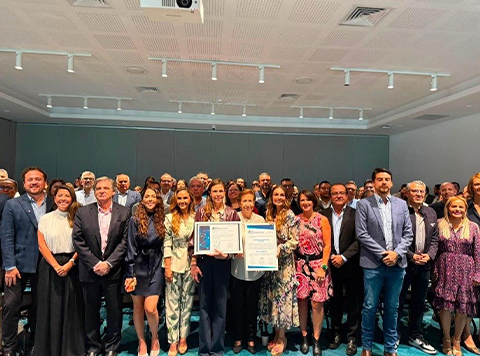
In this context, the Ibero-American Meeting of Smart Tourism Destinations was held from March 11 to 13, 2026. The event was organized by the Mexico City Tourism Promotion Fund, the Ministry of Tourism of Mexico (SECTUR), the National Fund for Tourism Development (FONATUR), and the Ibero-American Network of Smart Tourism Destinations.
The meeting brought together experts, destination managers, institutional leaders, and representatives of the tourism sector to reflect on the challenges and opportunities involved in implementing the STD model across Ibero-American territories.
One of the key conclusions of the event was that governance constitutes a major driver of transformation for Smart Tourism Destinations. Beyond the incorporation of technology, the development of these models depends on the ability of territories to coordinate stakeholders and establish mechanisms for collaboration among public administrations, the private sector, academia, and civil society.
Throughout the program, governance was analyzed at different levels: within destination management, in the functioning of the Ibero-American Network itself, and in inter-territorial cooperation dynamics. In all cases, its role as a structuring element for advancing more integrated and sustainable tourism strategies was emphasized.
In this regard, tourism governance is understood as the set of coordination mechanisms that align interests, foster dialogue among stakeholders, and support the development of public policies aimed at destination development. This perspective implies moving beyond fragmented management models toward more collaborative frameworks.
Another key aspect discussed was the multilevel dimension of governance. Tourism management does not occur solely at the local level; it is interconnected with regional, national, and international levels, requiring new models of coordination and cooperation across territories.
Within this framework, the Ibero-American Network of Smart Tourism Destinations has emerged as a key instrument for fostering regional cooperation. The network functions not only as a space for dialogue but also as an active platform for implementing the STD model.
Through the network, destinations gain access to working methodologies, training programs, best practices, and technical support that facilitate the implementation of the model. Additionally, network collaboration enables the sharing of experiences and lessons learned among territories at different stages of development.
This exchange of knowledge strengthens institutional capacities and contributes to building a collective learning ecosystem across the region.
Another topic of interest during the meeting was the growing role of data and artificial intelligence in tourism destination management.
One of the panels addressed the potential of organic data — data generated naturally through users’ digital interactions, such as online searches, urban mobility patterns, and service consumption — which provides real-time insights into visitor behavior.
In this context, artificial intelligence was presented as an increasingly important tool in the governance of Smart Tourism Destinations, particularly in data management and analysis. Unlike traditional tourism measurement systems, typically based on surveys or periodic statistics, AI enables the continuous processing of large volumes of data, identification of behavioral patterns, detection of changes in demand, and anticipation of trends.
This opens new possibilities for tourism management, allowing for more informed and adaptive decision-making. It was also emphasized that artificial intelligence can support and strengthen governance by facilitating coordination among stakeholders. However, the need for an open approach to data and technology management was highlighted, recognizing that governance processes involve negotiation among diverse interests. Destinations must therefore clearly define which aspects can be delegated to AI to foster collaboration and which must remain under human control to safeguard strategic objectives.
The expansion of the network reflects not only the interest of destinations in joining this collaborative space but also the consolidation of a regional agenda focused on strengthening governance, sharing knowledge, and promoting joint strategies for tourism development.
Rather than a passing trend, Smart Tourism Destinations are emerging as a new way of understanding tourism management, one that prioritizes cooperation, strategic use of knowledge, and the development of governance structures capable of addressing the challenges of an increasingly complex tourism landscape.
In Mexico, destinations such as Tequila, Mexico City, and Queretaro, along with the University of Guadalajara, SECTUR, and FONATUR as members of the network, will serve as key agents of change in implementing this methodology and driving tourism development.
Nota original del portal Mexico Business: Smart Tourism: Governance and AI Driving the Future